Prehistory and Dinosaurs
Published on
by Keys Holidays Cottages


The north Norfolk coast is home to some of the earliest evidence of human life in Britain, with new archaeological finds being found all the time, from an almost complete mammoth skeleton to a Bronze Age timber circle found almost in the sea at Home – described as Norfolk’s Stonehenge.
One great way of discovering all of this ancient history is to follow the Deep History Coast Discovery Trail, which covers 36km of north Norfolk coastline.
For those interested in finding out more about our ancient ancestors, this is the ideal part of the country to start discovering.
Cover image: Hannah Pemberton/Unsplash
- Table of contents
- Seahenge
- The West Runton Mammoth
- Roarr!
- Sheringham Chalk Reef
- Grime’s Graves
- Ancient History at Norwich Castle
- The Oldest Human Footprints In Europe
Seahenge
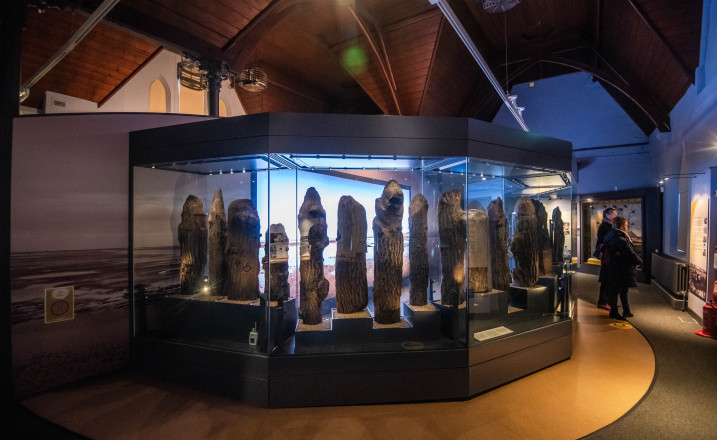
Built in 2049BC, during the early Bronze Age, Seahenge is a timber circle with an upturned tree root in the centre, and was probably used for ritual purposes. It consisted of an outer ring of 55 small split oak trunks forming a circular enclosure approximately seven metres in diameter.
The monument was discovered in 1998 by John Lorimer, and amateur archaeologist and beachcomber; before long wave erosion gradually exposed the ring of wooden posts. As the site started to suffer from erosion, the decision was made to undertake a full excavation, a costly and difficult task.
A reconstruction of Seahenge, including half of the timbers and the central stump, can be seen at the Lynn Museum in King’s Lynn. A second circle at Holme has been left in situ, and is slowly eroding – but it can still be seen on the beach.
Image: Copyright Norfolk Museums Service
Find out moreThe West Runton Mammoth
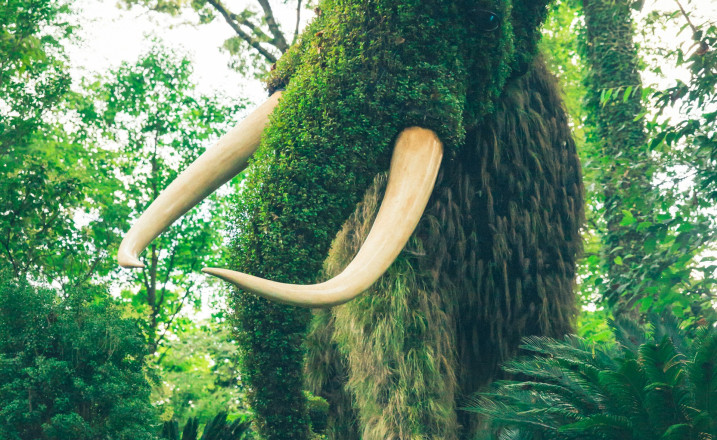
In 1990, two local residents made a remarkable discovery while walking on West Runton beach, when they saw what looked like a large bone sticking out of the cliff face. This kickstarted a major archaeological dig, and in 1995 85% of a mammoth skeleton was unearthed, by far the most complete skeleton of a steppe mammoth ever found in Britain.
The skeleton itself is now in special storage at the Norfolk Collections centre at Gressenhall (where there are regular public tours), whilst Cromer Museum and Norwich Castle Museum each have dedicated displays.
But the best place to get a feel for the discovery is to visit West Runton beach itself, where there is a Deep History Coast Discovery Point, one of 11 between Weybourne and Cart Gap. To delve even deeper, you can download a special Deep History Coast app to follow guided walks and find out more about the animals which roamed the north Norfolk coast in prehistoric times.
Image: Christopher Alvarenga/Unsplash
Find out moreRoarr!

Norfolk is home to the largest dinosaur themed adventure park in the UK: Roarr! In Lenwade. It boasts 25 ‘Roaar-some’ attractions across 85 acres of natural woodland.
Here you will find a wide variety of indoor and outdoor attractions, including the thrills of Swing-O-Saurus and Raptor Contraptor, the chance to run wild in Dinomite, the largest indoor soft play centre in Norfolk, and step back in time in Valley of the Dinosaurs, where adventurers come face-to-face with incredible prehistoric creatures. Those brave enough can take on the challenge of Predator High Ropes, while others can putt their way around the dinosaur-themed Crazy Golf, cool off in Dippy’s Splash Zone, or race to the finish in Dippy’s Raceway with go-karts.
The park offers ‘Toddler Thursdays’ on just over half of the weeks of the year, when only the attractions for younger children are open, for a much reduced ticket price.
Image: Roarr!
Find out moreSheringham Chalk Reef

Part of the 20 mile long Cromer Shoal chalk beds, Sheringham Chalk Reef is Europe’s largest 100 million year-old chalk reef. Designated as a Marine Conservation Zone, this 125 square mile area provides a vital habitat for diverse marine life, including crabs, lobsters, sponges and rare nudibranchs, making it a popular, shallow and unique site for snorkelling and diving.
The reef was created when dinosaurs ruled the world. It is so close to the shore that you can skin a stone out to it; at low tide it is visible from several places along the north Norfolk coast, including West Runton, Trimingham and Cley-next-the-Sea.
One way of discovering the reef is via the Sheringham Snorkel Trail, established in 2016 after divers rob Spray and Dawn Wilson found a Victorian-era iron sewerage pipework and decided it would make an ideal snorkel site. Details of the trail can be found on Sheringham seafront.
Image: Chris Reyem/Unsplash
Find out moreGrime’s Graves
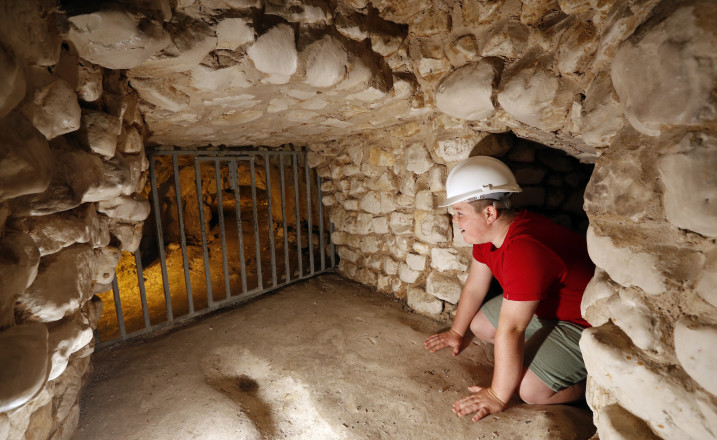
Inland from the coast, at Lynford near Thetford in the Breckland district of Norfolk, is a lunar landscape of more than 430 shafts and quarries which was first called Grime’s Graves by the Anglo-Saxons - the name meaning ‘pits of the pagan god Grim’.
It was in 1870 when they were first excavated that they were identified as neolithic flint mines, dug around 2650BC.
Today you can explore this fascinating site, including descending nine metres into Pit Number one, where film projections immerse you in the lives of the people who lived and worked there. Above ground, an exhibition offers a virtual tour of Greenwell’s pit, as well as the opportunity to handle replica objects. The site can be explored via self-guided walking trails.
Grime’s Graves is open from March until October, seven days a week.
Image: English Heritage
Find out more
Ancient History at Norwich Castle
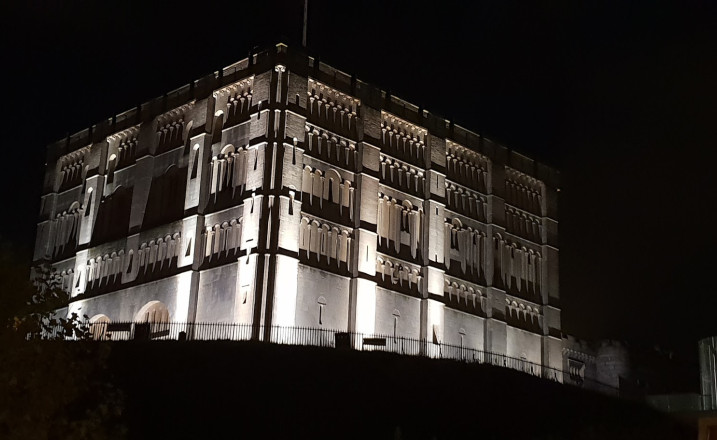
The stunning Norman Castle in Norwich - which reopened in 2025 after an acclaimed multi-million pound refurbishment project - contains several galleries where you can explore the ancient history and prehistory of Norfolk.
These include:
- The Anglo-Saxons and Vikings Gallery, one of the best collections of Anglo-Saxon material in the country, with over 900 superb objects on display
- Boudica and the Romans, which tells the story of Boudica, the great warrior Queen of the Iceni, and her revolt against the Romans
- A new display of early medieval coins, part of the West Norfolk Hoard of 129 coins found between 2014 and 2020, the largest collection of seventh century gold coins ever found in Britain
- The Gallery of Medieval Life, created in partnership with the British Museum, its first medieval gallery outside London
Norwich Castle is open every day of the year except Christmas Day, Boxing Day and New Year's Day.
Image: Newman Associates PR
Find out more
The Oldest Human Footprints In Europe

In May 2013 a storm exposed mysterious hollows on the beach at Happisburgh. A team from the Natural History Museum confirmed that these were trails of human footprints, a staggering 900,000 years old - making them the oldest human footprints in Europe. They were left by Homo antecessor, an early human species known to be present in Europe at the time.
Analysis of 49 identified footprints suggests a group of at least five individuals, including adults and children, moving southward.
Happisburgh is now one of the most important archaeological sites in Europe, as scientists race against time to discover more before they are lost to the sea as a result of dramatic costal erosion.
Today Happisburgh has a secluded sandy beach, a distinctive 18th century lighthouse and a 15th century church, making it a fascinating place to explore. Informative information panels on the beach tell more about the ancient human footprints, as part of teh Deep History Coast Discovery Trail.
Image: Victoria Feliniak.Unsplash
Find out more